

Transport Wheelchair vs Standard Wheelchair: Key Differences
Choosing between a transport wheelchair and a standard wheelchair can be confusing because they look similar at first glance. Both provide seated mobility support, but they are designed for different levels of independence, caregiver involvement, and everyday use.
For caregivers, the difference can affect how easy it is to move someone safely through the home, into a car, or through a medical appointment. Understanding the main wheelchair types helps families choose equipment that matches the person’s strength, routine, and need for support.
Start With How the Chair Will Be Used
The best choice often begins with one practical question: will the person move the chair independently, or will a caregiver usually push it? A transport chair is usually better for short trips and caregiver-assisted movement, while a standard wheelchair may be better when the user needs more control during daily mobility. Looking at use first keeps the decision focused on real routines instead of product features alone.
Key Differences Between Transport and Standard Wheelchair Types
Small design differences can make a major difference in how each chair supports movement. Families comparing different wheelchair types should look at wheel size, portability, and independence level before deciding.
Wheel Size and Handling
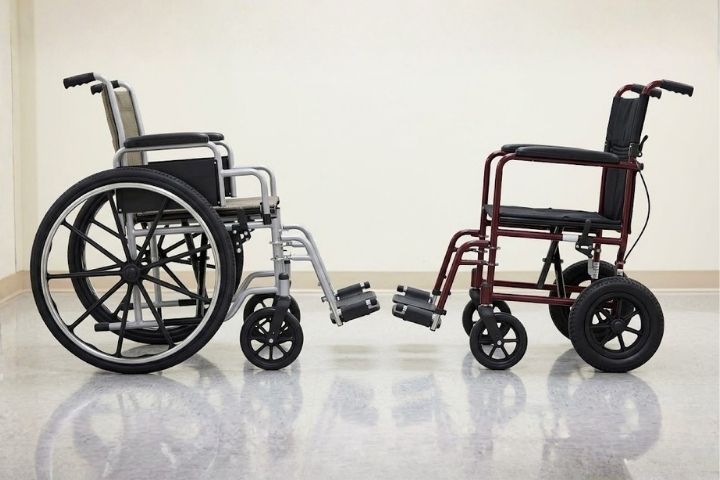
Transport chairs usually have smaller wheels on all four corners, so they are designed to be pushed by another person. Standard wheelchairs often have larger rear wheels with hand rims, giving the user more ability to propel, turn, and reposition the chair independently.
Weight, Portability, and Storage
Transport chairs are often lighter and easier to fold, lift, and place inside a vehicle. Standard wheelchairs can be heavier, but they may offer stronger support for people who need a chair for longer periods during the day.
Independence and Caregiver Support
A transport chair works best when a caregiver, family member, or staff member will usually guide the chair. A standard wheelchair may be more appropriate when the user has enough upper-body strength, coordination, and stamina to move without relying on someone else each time.
Those differences can affect comfort, safety, and how easy the chair is to use throughout the day. Looking at daily routines first can make the decision feel less overwhelming for both users and caregivers.
Choosing Between Transport and Standard Wheelchair Types
The best choice usually depends on whether the chair is needed for short assisted trips or more regular independent movement. Families comparing wheelchair types should think about the user’s strength, caregiver availability, travel needs, and daily routine before deciding..
When a Transport Chair May Be the Better Fit
A transport chair can make sense for medical appointments, errands, short outings, or situations where a caregiver will stay nearby. Families deciding between short-term and long-term mobility needs may also benefit from understanding how to choose between renting and buying medical equipment.
When a Standard Wheelchair May Be the Better Fit
A standard wheelchair may be better when the person needs more control over daily movement. Larger rear wheels and hand rims allow the user to propel, turn, and reposition the chair more independently.
Both options can be helpful, but they solve different mobility needs. Choosing based on how the chair will actually be used can help caregivers avoid buying equipment that feels convenient at first but does not support the person well over time.
Travel, Appointments, and Daily Use Scenarios for Wheelchair Types
A transport chair often fits travel days because it is lighter, easier to load, and simpler for a caregiver to guide through parking lots, clinic entrances, and waiting rooms. It can be a practical choice when the person can walk short distances but needs seated support for longer stretches.

For daily use, a standard wheelchair may offer better control if the user wants to move around the home or care setting without depending on someone else each time. When comparing wheelchair types, families should match the chair to the setting, frequency of use, and amount of caregiver support available.
Cost Questions Around Wheelchair Types
Cost can vary depending on the chair design, frequency of use, added accessories, and whether the equipment is purchased or rented.
Families should also think beyond the initial price and consider long-term comfort, caregiver strain, transportation needs, and how often the chair will be used each week. James Medical helps patients and caregivers compare mobility equipment, understand practical day-to-day differences, and explore options that support safer movement at home and during travel. Schedule a mobility equipment consultation with James Medical for wheelchair support that fits your daily routine.