

Lift Chair Sizing Guide for Caregivers
Lift chairs can look similar in a showroom, but small differences in size can affect how well the chair supports daily movement. A seat that feels comfortable at first may still be too deep, too high, or too wide for the person using it. Before searching for lift chairs for sale near me, caregivers should understand how fit affects comfort, safety, and the lift function itself.
The goal is not simply to choose a small, medium, or large chair. Lift chairs for seniors work best when the seat dimensions match the person’s body and support the feet, legs, and back. Taking a few measurements before shopping can reduce the guesswork and make an in-person trial much more useful.
Sizing Starts With the Person, Not the Chair Label
Caregivers often start by scanning size labels, but those categories only narrow the options. For families in Fort Wayne, the more useful starting point is the person’s seated position. A few measurements can reveal which models are worth testing at the showroom.
A Lift Chair Can Feel Comfortable and Still Be the Wrong Size
Comfort alone does not indicate whether a chair will properly support the person. A roomy seat may feel relaxing in the showroom, but it can still leave the user sitting too far back, reaching for the armrests, or struggling to place both feet securely on the floor.
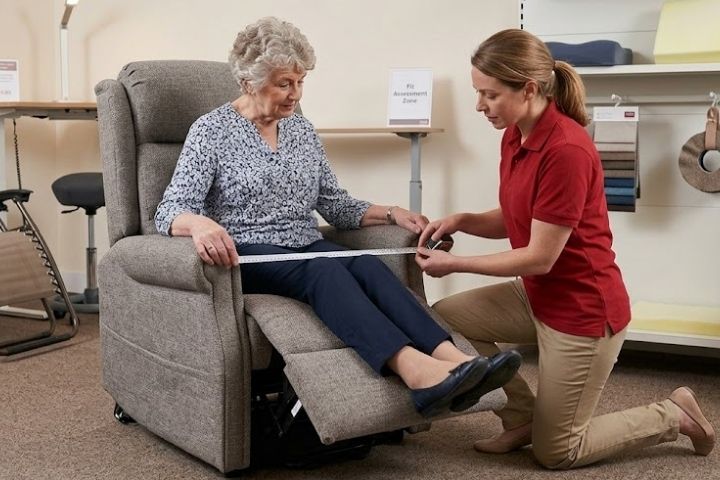
Lift chairs for seniors need to support the body before the lift function begins. For households across Fort Wayne, the best fit keeps the hips, legs, feet, and back in a stable position while still giving the person enough room to sit comfortably. A chair that matches the body can make the controls and lift mechanism more useful during everyday routines.
Take These Measurements Before Comparing Lift Chairs for Seniors
A few measurements can help caregivers focus on the most suitable models. When looking at lift chairs for seniors, focus on how the person sits in their current chair and write down the numbers that affect support, comfort, and function. For Fort Wayne shoppers, bringing these measurements to an in-person trial can save time and prevent an avoidable sizing mistake.
Seat Width
Measure across the hips while the person is seated, then allow a little extra room on both sides. The chair should feel comfortable without leaving the user too far from the armrests.
Seat Depth
Measure from the back of the hips to the back of the knee while the person is sitting upright. A properly sized seat should support the thighs without pressing into the backs of the knees or forcing the person to slide forward.
Seat-to-Floor Height
Measure from the back of the knee down to the floor while both feet are resting flat. The right height helps the person sit with better support and place their feet securely before using the lift function.
Weight Capacity
Check the chair's recommended weight range, but do not treat it as the only deciding factor. A model may support the person’s weight and still be too deep, too high, or too wide for a comfortable fit.
Why Size Labels for Lift Chairs for Seniors Are Only a Starting Point
Lift chairs for seniors may be grouped into small, medium, or large categories, but those labels do not tell the whole story. Two chairs in the same category can still have different seat depths, widths, heights, weight limits, and recline features.
In Fort Wayne, caregivers can use the category to begin the search, but measurements should guide the final decision. The better fit is the chair that supports the person’s body comfortably and keeps the controls, armrests, and foot placement easy to manage.
Fit Problems Caregivers Can Spot Early
One common mistake is choosing a chair based only on weight capacity. A model may safely support the person’s weight but still feel too deep, too narrow, or too high once they sit down.
Caregivers should also pay attention to how easily the person reaches the controls and rests their feet on the floor. When lift chairs for seniors do not match the user’s body, even small fit issues can make daily use less comfortable.
Room space deserves a final check before ordering. In Fort Wayne homes, the chair needs enough clearance to recline without blocking a walkway or sitting too close to a wall.
Test Lift Chairs for Sale Near Me With the Person Who Will Use Them
Measurements can guide the search, but they cannot show how the chair feels during actual use. When comparing lift chairs for sale near me, the person should sit in the chair, reach for the controls, rest both feet on the floor, and test the lift motion before making a decision.

The trial should also include the recline positions and footrest. Testing the chair in person gives Fort Wayne caregivers a chance to spot small issues that are easy to miss online, such as controls that feel awkward to reach or a seat edge that presses behind the knees. A good fit should feel supportive from the first seated position through the full lift.
Use the Measurements to Narrow the Final Choice
A lift chair should match the person’s body, not just the available space in the living room. Seat width, depth, height, weight capacity, and room clearance all shape how well lift chairs for seniors support everyday routines. Taking those measurements before shopping gives caregivers a clearer way to compare the options.
James Medical can help families in Fort Wayne compare chair dimensions, controls, and fit. Bring your loved one’s measurements to a showroom and test the most suitable models before placing an order.